Last Updated: November 22, 2026
Quick Summary
Choosing between black car services means comparing licensing, insurance, chauffeur training, fare structures and how a firm handles delays, not just the cars and prices. Ask each operator exactly what its quoted price includes, how waiting time is charged and what its cancellation terms are before you commit.
- Ask any provider for its operator licence number and check it with the licensing authority that issued it.
- Confirm whether the quoted fare is a fixed fare, an hourly rate or subject to waiting-time charges.
- For airport transfers, ask whether the flight is tracked automatically and if waiting time after landing is included.
- Confirm passenger count, case count and child seats in writing before you pay.
- Check the cancellation window in hours and whether a delayed flight is treated differently from a change of plan.
Table of Contents
- What Actually Separates One Black Car Service From Another
- Black Car Service Pricing: What You Are Really Paying For
- Black Car Service vs Chauffeur Service: Where the Line Blurs
- How to Verify Licensing, Insurance and Chauffeur Credentials
- Black Car Service for Airport Transfers: Flight Tracking and Meet-and-Greet
- Best Cars for Chauffeur Service: Sedans, SUVs and Passenger Capacity
- Booking Terms, Cancellations and What Happens When Something Goes Wrong
- Requesting a Quote From JM Executive for Your Next Journey
- Frequently Asked Questions
What Actually Separates One Black Car Service From Another
Choosing between black car services comes down to more than the badge on the bonnet, and the same holds for any black car services you shortlist. The difference sits in licensing, insurance, chauffeur training, fare structures and how a firm behaves when a flight lands early or a meeting overruns.
JM Executive runs chauffeur services for corporate and private clients in London. Below we break down the seven things worth comparing before you commit to a provider, from pricing models to vehicle suitability.
The core argument running through this guide is simple. Most buyers compare cars and prices.
Black Car Service Pricing: What You Are Really Paying For
A black car service is a pre-booked, chauffeured vehicle service, usually charged at a fixed fare or hourly rate rather than metered on the day. Ask each operator exactly what its quoted price includes.
Pricing models vary more than most buyers expect. Ask which model applies before you compare two quotes, because a low headline fare can be offset by charges that apply later.
For a fuller explanation of how transparent pricing is structured, see our guide to transparent pricing for executive transport.
Fixed Fares, Hourly Rates and Waiting Time
Fixed fares, hourly rates and waiting-time charges are the structures to ask about. Confirm with the provider how each one is applied to your booking.
Ask what waiting-time terms apply and what happens after any free period. Our breakdown of hidden fees in chauffeur billing covers the clauses worth checking.
Black Car Service vs Chauffeur Service: Where the Line Blurs
In practice, the two terms overlap heavily. A black car service typically describes the vehicle class and booking model; chauffeur service describes the standard of driver and service. Operators often use both labels for their services.
The distinction that matters is the driver. A chauffeur is trained for discretion, routing, passenger care and presentation, not simply to drive from A to B.
If you want the fuller explanation, our team has written a clear comparison of the difference between a driver and a chauffeur. It’s worth reading before you assume every operator means the same thing by the word.
How to Verify Licensing, Insurance and Chauffeur Credentials
Verification is the step most buyers skip, and it’s the one that protects you. Ask any provider for its operator licence number and check it with the licensing authority that issued it.
Insurance matters just as much. Ask any provider which policy covers its vehicles when carrying passengers for reward. Ask directly whether the policy covers passenger-carrying for reward, and don’t accept a verbal assurance in place of a straight answer.
Chauffeur credentials are the third check. Ask whether drivers are vetted, how they’re trained and whether they’re employed or subcontracted.
Black Car Service for Airport Transfers: Flight Tracking and Meet-and-Greet
A good airport transfer is built on two things: flight tracking and a meet-and-greet that actually happens. Flight tracking means the operator monitors your arrival time and adjusts the pickup accordingly.
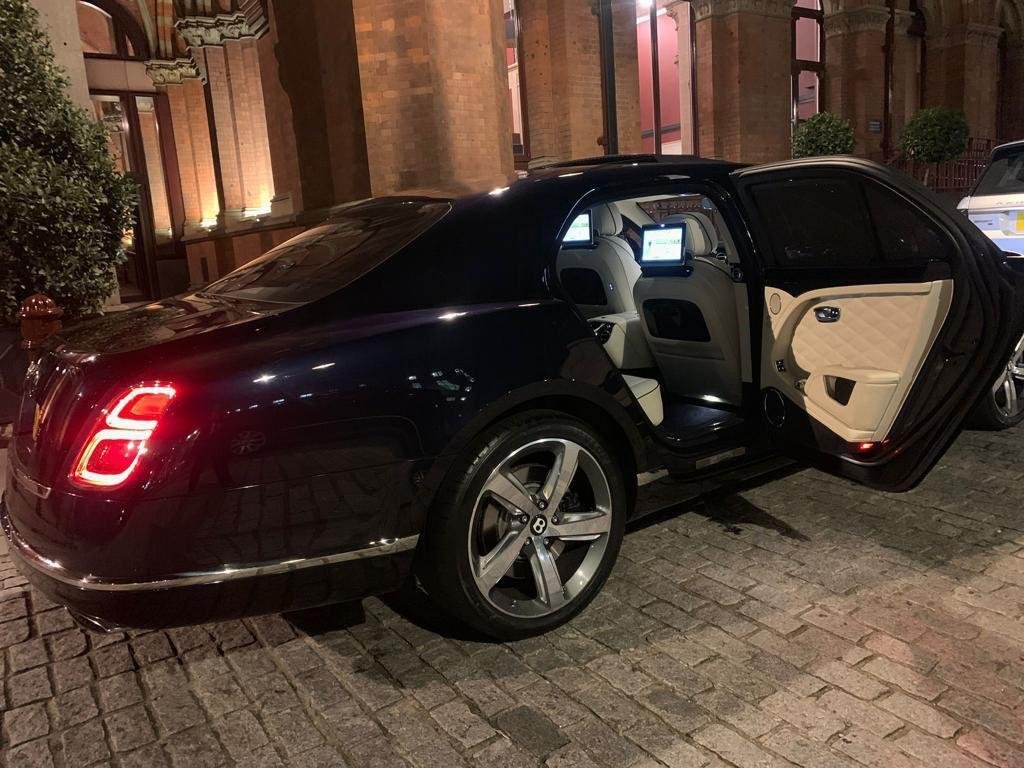
Meet-and-greet is the second half. Ask whether the chauffeur will wait inside arrivals and help with luggage before you book.
Ask two questions before booking: is the flight tracked automatically, and is the waiting time after landing included or charged? Our practical guide to booking a chauffeur for airport transfers walks through the details.
Best Cars for Chauffeur Service: Sedans, SUVs and Passenger Capacity
Vehicle choice should follow the journey. A luxury saloon suits one or two passengers travelling light and wanting a quiet cabin. An SUV or MPV suits larger groups, extra luggage or passengers who prefer a higher seating position. The mistake is booking by badge rather than by the actual load: two passengers with four large cases and two cabin bags will not fit comfortably in a standard saloon, however luxurious it looks on the booking page.
The practical checks are passenger capacity, luggage capacity, child-seat provision and accessibility. Ask the operator to confirm the luggage capacity in actual cases, and whether the boot accommodates a folded wheelchair or golf bag without sacrificing passenger space.
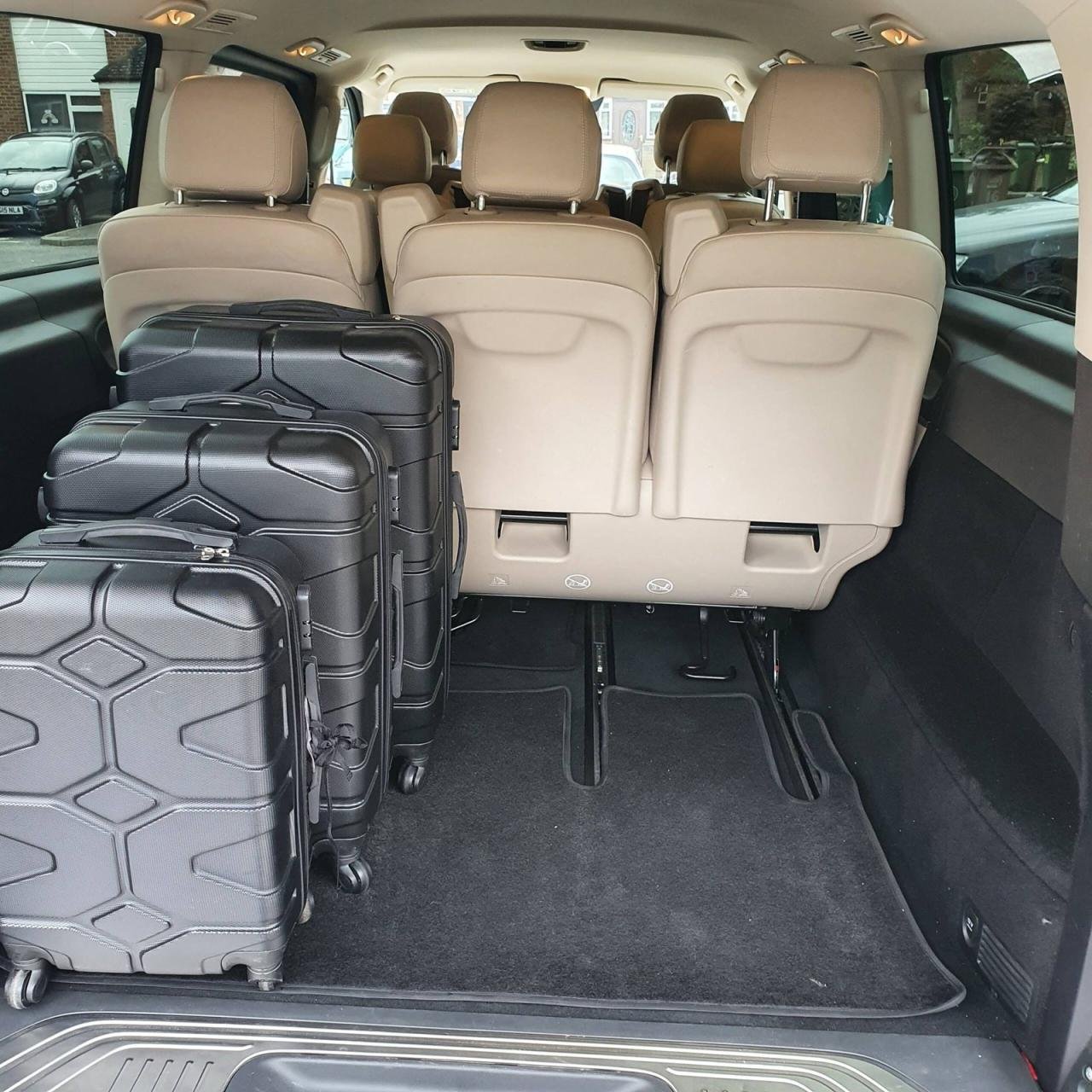
We run Mercedes S-Class, V-Class and Range Rover vehicles, which covers the sedan, MPV and SUV cases above. If you want to see what a specific option offers, our page on the Mercedes S-Class chauffeur service sets out the vehicle and its capacity.
| Vehicle type | Best for | Passenger capacity | Luggage | Access notes |
|---|---|---|---|---|
| Luxury saloon | One or two passengers, business travel | Up to 3 | 2-3 cases | Lower entry height; not suitable for a wheelchair unless folded and small |
| MPV | Small groups, airport runs with luggage | Up to 7 | Generous; seats fold for extra bags | Sliding doors and higher roof aid access |
| SUV | Higher seating, mixed terrain, VIP arrivals | Up to 4 | 3-4 cases | Higher step; check if a side step is available |
Child seats are the detail most buyers forget. Confirm with the provider whether a suitable child seat is available, whether it is included in the fare and whether it will be fitted before pickup.
Accessibility needs a direct question rather than an assumption. Accessibility needs should be raised directly with the provider. Ask whether it can supply a wheelchair-accessible vehicle and how any substitution would be handled.
Confirm the vehicle class, the passenger count and the case count in writing before you pay.
Booking Terms, Cancellations and What Happens When Something Goes Wrong
The terms you agree to matter more than the journey you’re imagining. Read the cancellation window, the amendment policy and the escalation contact before you book. Ask the provider to put those terms in writing and to state the cut-off in hours.
Cancellation terms can vary by booking type, so confirm the terms that apply to your booking. Ask three questions: how many hours before pickup can you cancel without charge, what percentage is retained inside that window, and whether a cancellation caused by a delayed flight is treated differently from a change of plan. The answers should be in the confirmation email, not just on a web page that can change.
Waiting time is the clause that generates most disputes. For airport pickups, ask what free waiting period applies after landing and whether it starts from the actual landing time or the scheduled time. For hourly bookings, ask whether the clock starts when the car arrives at the pickup address or when the first passenger gets in. The specific allowance is for the provider to state and for you to check.
Flight tracking is the mechanism that makes an airport booking work. Ask whether the provider monitors the flight number you give and adjusts the pickup if the flight lands early or late. If the flight is diverted or cancelled, ask what happens to the booking and the fare.
No-shows need a definition. If the chauffeur waits inside arrivals with a name board and the passenger does not appear, how long does the chauffeur wait, and at what point is the booking treated as a no-show? Ask whether the operator attempts contact by phone and whether the waiting time is charged at the hourly rate. For departures, ask what happens if the passenger is not ready at the pickup time and whether the chauffeur will wait or leave.
Service failure is the real test. Ask what happens if a driver is late, the car isn’t up to standard or a booking is cancelled at short notice. The answer tells you whether you’re dealing with an operator with spare capacity or a broker who will be phoning around. Ask whether the provider offers an out-of-hours contact, how it substitutes vehicles and what refund or credit route applies if the service falls short.
For regular bookings, ask about corporate rates and how they’re structured across a longer period. Ask whether rates are held for the contract period, whether invoicing is available, and how amendments are handled.
Compare the terms as carefully as the price. Our breakdown of hidden fees in chauffeur billing covers the clauses worth checking.
Requesting a Quote From JM Executive for Your Next Journey
The gap between a good and a poor black car service rarely shows up in the first journey. It shows up in the third, when a flight is delayed, a meeting runs long and you need someone to answer the phone. Compare credentials, pricing structure and terms before you commit, and the rest follows.
If you want a provider that plans for those moments, JM Executive runs a fleet of Mercedes S-Class, V-Class and Range Rover vehicles, with chauffeurs trained for safety and discretion and knowledge of London for efficient routing. We provide airport transfers, business meeting transport and private tours.
Get started with JM Executive and book transport that holds up when the day doesn’t go to plan.
Frequently Asked Questions
What should I compare when choosing between black car services?
Focus on five things: how pricing is structured (fixed versus hourly, and what waiting time costs), the operator’s licensing and insurance cover, the vehicle fleet and its luggage capacity, the chauffeur’s training and vetting, and the booking terms covering cancellations and delays. Ask each provider for these in writing before you commit. A service that is transparent about all five is usually the safer choice for executive travel and client-facing journeys.
How do black car services differ from chauffeur services?
The terms overlap heavily. A black car service typically centres on pre-booked, fixed-fare journeys in a luxury saloon or SUV, often airport transfers and point-to-point corporate trips. A chauffeur service usually implies a hire-by-the-hour arrangement where the driver stays with you across multiple stops. The practical difference for a booker is the pricing model and how much flexibility you need. Confirm which model applies before you compare quotes, because they are not directly like for like.
Is a black car service better than a ride-hailing app for business travel?
For high-stakes meetings, airport pickups and client visits, a pre-booked black car service removes most of the variables. You get a named chauffeur, a specified vehicle, a fixed fare agreed in advance and a booking record your firm can reconcile. Ride-hailing apps suit short ad-hoc trips where speed matters more than certainty. If a late arrival would damage a client relationship, pre-booking is the more defensible choice.
How can I check whether a black car service is reliable?
Ask three direct questions: who holds the operator’s licence and can they show it, what insurance cover applies to passengers, and what happens if a driver is late or cancels. Then ask for references from corporate clients with similar booking patterns to yours. A provider that answers all three without hesitation, and offers a named contact for service failures, is demonstrating the operational discipline that reliability depends on.